

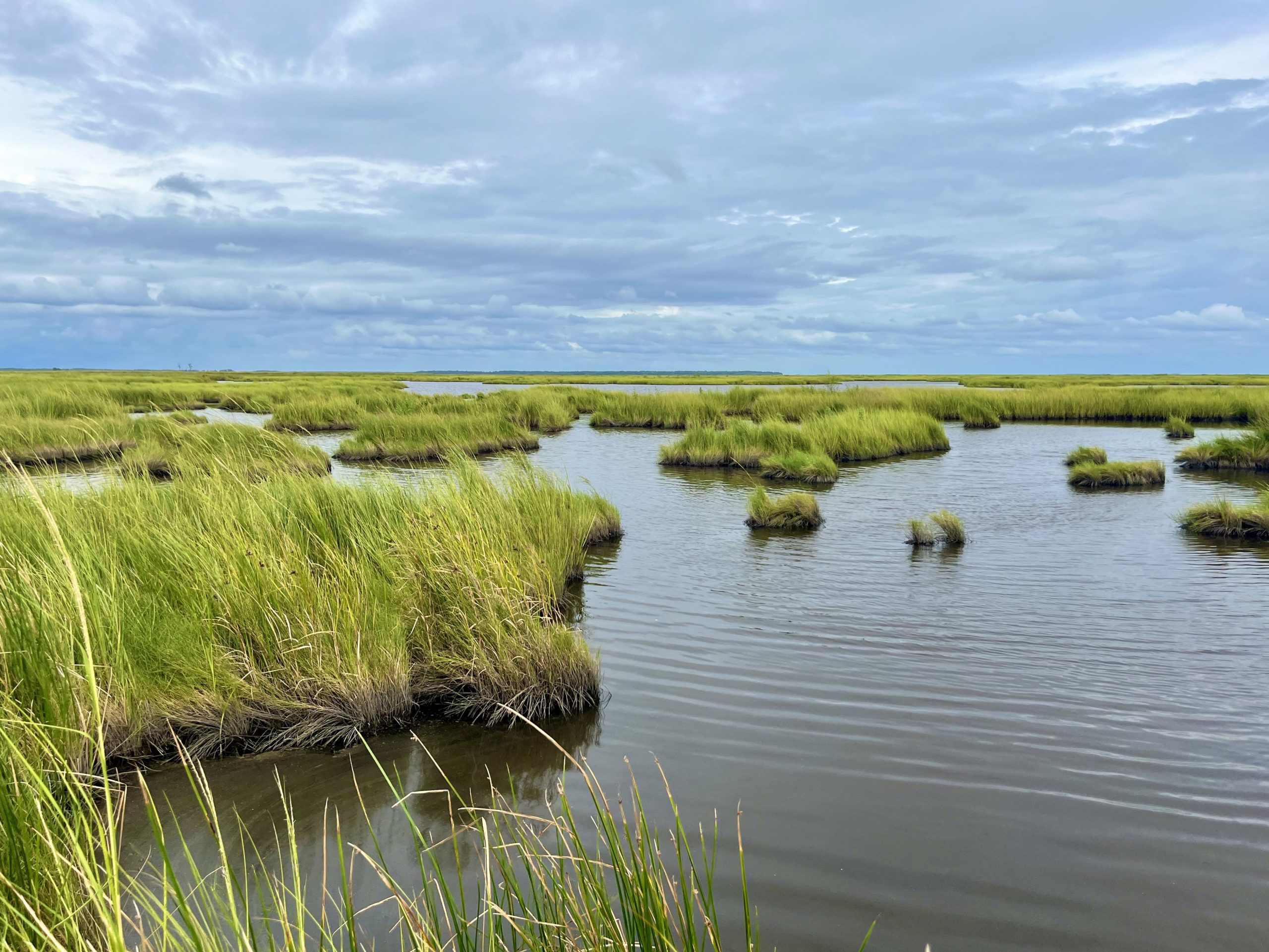
A low marsh in Dorchester County. DNR photo
The Maryland Department of Natural Resources is seeking proposals for living shoreline projects on the lower Eastern Shore.
DNR released a Request for Proposals to solicit applications for construction, design/build, and design proposals for living shoreline projects. The total funding available through this program for living shoreline restoration projects is approximately $17 million. The Request for Proposals will be open until April 6, 2026 and posted on the Roots for Resilience: Open Solicitations webpage along with further instructions and eligibility requirements.
Proposed living shorelines for this initiative should be located in Wicomico, Somerset, or Dorchester counties and protect substantial areas of adjacent wetlands. The department aims to award large-scale living shoreline restoration projects that will collectively protect a total of 400 acres of adjacent high quality tidal marsh habitat.
Public land projects that protect significant marsh acreage are prioritized, and multiple awards are expected. The minimum project size is $1 million, but smaller design-only requests may be allowed with DNR approval. Matched funding is not required for proposals, but leveraged funds are encouraged.
A living shoreline uses nature-based erosion control, such as marsh plantings, coir logs, sills, and breakwaters, to stabilize shorelines while maintaining natural coastal processes. These approaches reduce erosion and flooding, protect infrastructure, lower long-term costs, support working waterfronts, and strengthen coastal resilience.
Interested applicants should contact Ari Engelberg ([email protected]) for information about the RFP, to inquire about potential project ideas, and to request a site visit.
This effort is funded through a Climate Pollution Reduction Grant from the U.S. Environmental Protection Agency, awarded to the Atlantic Conservation Coalition, made up of four coastal states, and including the Maryland Department of the Environment.
This project has been funded wholly or in part by the United States Environmental Protection Agency under assistance agreement 3D25824 to the North Carolina Department of Natural and Cultural Resources. The contents of this document do not necessarily reflect the views and policies of the Environmental Protection Agency, nor does the Environmental Protection Agency endorse trade names or recommend the use of commercial products mentioned in this document, as well as any images, video, text, or other content created by generative artificial intelligence tools, nor does any such content necessarily reflect the views and policies of the Environmental Protection Agency.
